Keeping fire doors working in blocks of flats
A block of flats usually has fire doors at the flat entrances, on the stairs and along the corridors.
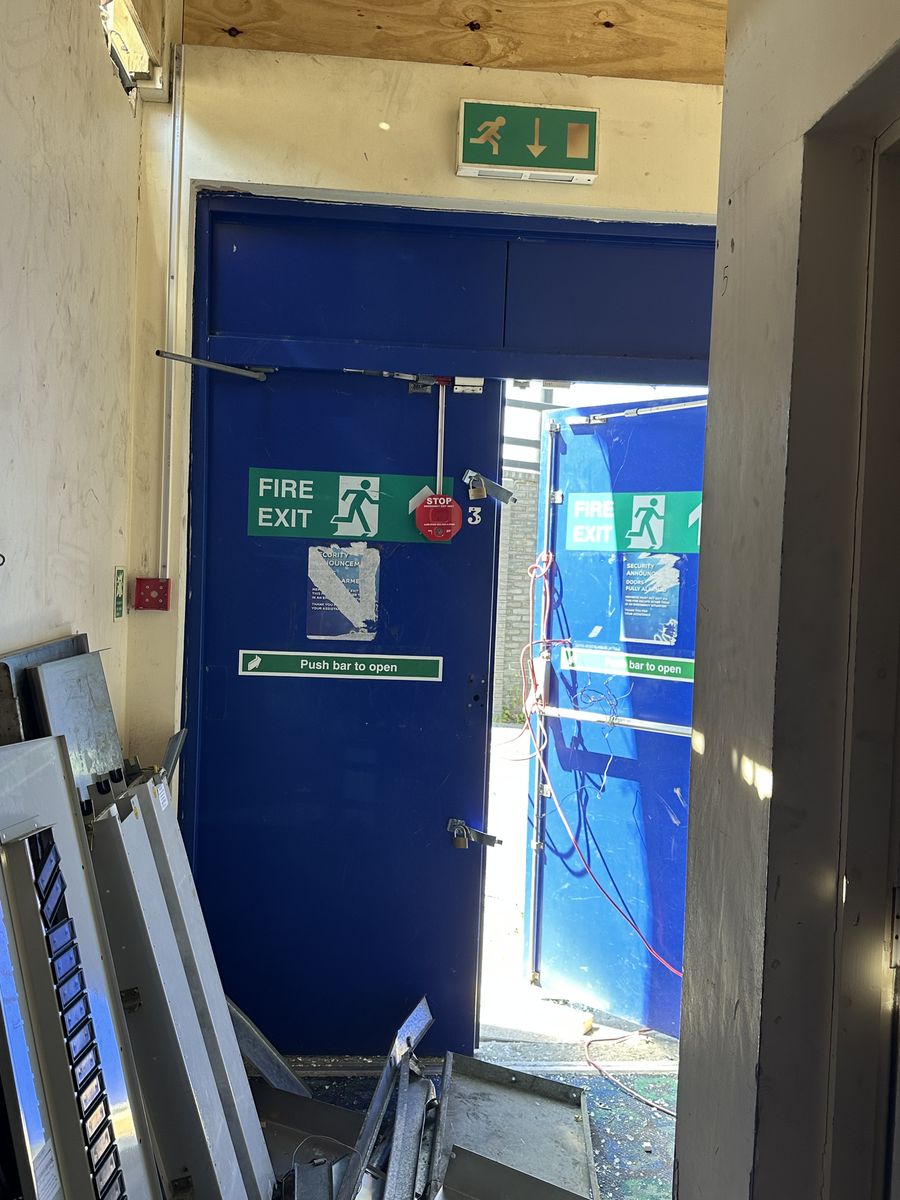
A named person keeps them working, and the routine checks are simple.
These notes cover who looks after the doors in England, what the checks look at, and what to ask when a door has to be made to fit.
Who looks after the doors
The common areas of a block of flats count as non-domestic premises under fire safety law. GOV.UK says the "responsible person" for those shared areas is the landlord, the freeholder or the managing agent.
In shops, offices and other workplaces, the responsible person can also be the employer, the owner or an occupier. GOV.UK sets out their duties in its guide to fire safety in the workplace.
The responsible person must carry out a fire risk assessment and review it regularly. They must also keep fire safety measures in good order. Scotland and Northern Ireland have their own rules.
What the doors in a block are for
Government guidance sorts the fire doors in a block of flats into four groups. Flat entrance doors come first, because most fires in blocks start inside a flat. Doors to stairs and lobbies keep the way out clear of smoke.
The other two groups divide long corridors or close off plant rooms, cupboards and service risers.
The routine the law sets out
The Fire Safety (England) Regulations 2022 came into force on 23 January 2023. They cover buildings with two or more flats and shared parts that residents would use to escape.
Residents must be told to keep fire doors shut, to leave the self-closing devices alone and to report any damage straight away. New residents should be told soon after they move in. Everyone should be reminded at least every 12 months.
Where the top storey is more than 11 metres up, routine checks apply as well. Doors in communal areas must be checked at least every three months. The responsible person must use best endeavours to check every flat entrance door at least every 12 months. They must keep a record of those steps, including any flat where access was refused.
What a simple check looks at
The government guidance says these checks are visual and need no tools. With some instruction, a caretaker or managing agent can do them.
The same points come up on every door.
- The door closes fully into its frame on its own, from wide open and from about 15 degrees.
- The gap between the door and the frame is no more than 4mm, except at the bottom.
- Intumescent strips and smoke seals, where fitted, are undamaged and not painted over.
- The hinges, the glass and the letterbox are sound.
- Nobody has swapped the door for one that does not resist fire.
Repairs or replacements that a check turns up must be done by a competent contractor, as soon as reasonably practicable.
When a door has to be made to fit
Some openings need a door made to measure. In England, Approved Document B explains how fire doorsets are rated. A rating such as FD 30 means 30 minutes of integrity in a fire test. An added S means the door also limits the leakage of smoke. The European classification writes the same idea as E 30 Sa.
The guidance warns that test evidence has to apply to the complete installed doorset. Small differences in detail can change the rating a great deal. So it is worth asking the maker which test or certification covers the door as it will be built and fitted, with its frame, glass and ironmongery.
Most fire doors also need a self-closing device. The exceptions include cupboard doors, service duct doors kept locked shut, and doors inside a flat.
Older doors in older blocks
Revised government guidance says an older flat entrance door is not unfit just because it has no certificate or no seals. A door that met the standard when it was made will usually still protect the shared escape route. That holds if it is undamaged, closes properly and has no large gaps.
Whether a door is good enough is a question for the fire risk assessment.
Useful links
- GOV.UK: Fire Safety (England) Regulations 2022, fire door guidance
- legislation.gov.uk: regulation 10, fire doors
- GOV.UK: fire safety in the workplace
- GOV.UK: fire risk assessments
- GOV.UK: Approved Document B (fire safety)
- legislation.gov.uk: the Regulatory Reform (Fire Safety) Order 2005
- Fire Door Safety Week: advice by building type